Alaska's Hidden Communities: Why the Last Frontier Attracts Modern Survivalists
- Melissa Saulnier

- Sep 16, 2025
- 4 min read

From investment bankers to military veterans, educated professionals are trading city life for off-grid compounds in America's wildest state. But what happens when paradise becomes a crime scene?
Deep in the Alaskan wilderness, where the nearest neighbor might be fifty miles away and the closest law enforcement even farther, communities exist that most Americans never see. These aren't the stereotypical bunker-dwelling extremists of popular media. Instead, they're often led by former investment bankers, retired military officers, and disillusioned professionals who've chosen to build something entirely different.
But sometimes, these remote havens become the setting for deadly secrets.
The Last Frontier's Magnetic Pull
Alaska draws survivalist and cooperative communities like no other state, and the reasons go far beyond simple geography. While the state's 663,300 square miles of wilderness provide obvious appeal for those seeking isolation, the real attraction runs deeper.
It's about freedom in its rawest form.
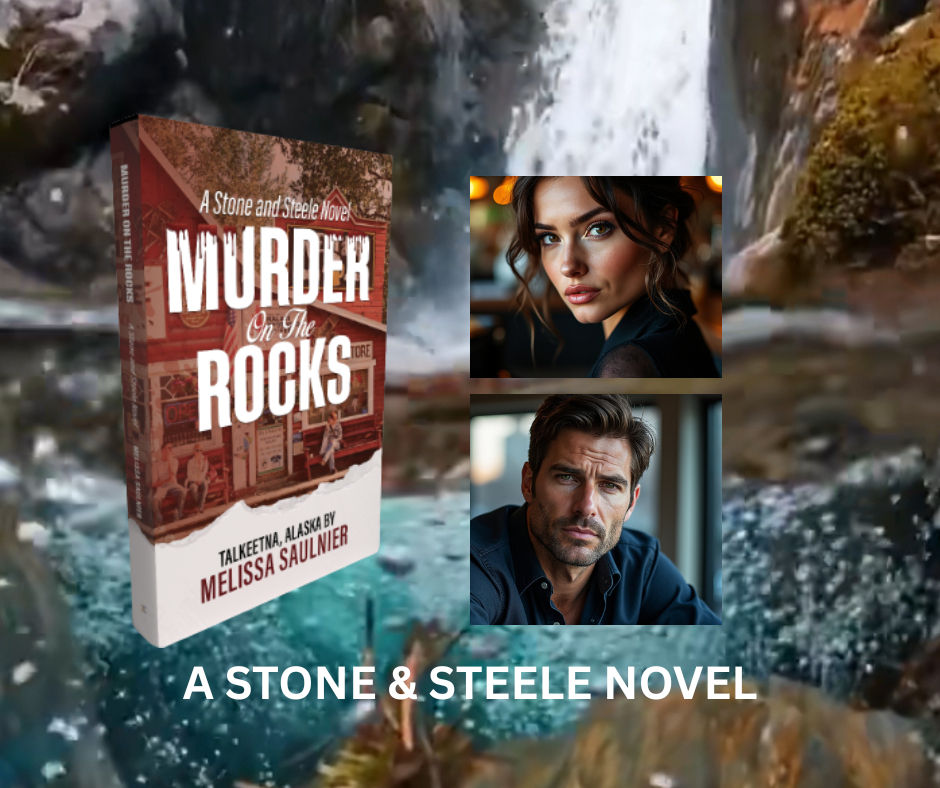
Consider the characters from my latest mystery novel Stone and Steele: Murder on the Rocks. A former mining engineer who discovered gold in a remote stream, Walter represents a very real type: the educated professional who sees Alaska as a place where intelligence, preparation, and determination can still carve out true independence.
"Alaska's unofficial motto is live-and-let-live," explains one character in the novel, and this cultural acceptance creates space for alternative communities that might face suspicion or legal challenges elsewhere.
More Than Geography: Why Alaska Works
Economic Independence
Alaska's abundant natural resources, timber, wildlife, water, and mineral deposits, support genuine self-sufficiency. Unlike survivalist attempts in other states that might struggle with basic resource availability, Alaska offers everything needed for independent communities to thrive.
Legal Space
The state's libertarian culture and vast federal lands create legal opportunities for alternative communities. Many Alaskans already live off-grid by necessity, making survivalist philosophies less exotic and more practical.
Economic Uncertainty
Alaska's boom-bust economy, driven by oil prices and seasonal industries, creates the kind of economic instability that pushes people toward self-sufficient lifestyles. When your job depends on fluctuating oil markets, growing your own food starts looking pretty smart.
When Paradise Meets Crime Scene

But here's where fiction meets troubling reality: these remote communities can become perfect settings for criminal activity. In Murder on the Rocks, FBI Agent Jeremiah Steele and Detective Emma Stone discover how a peaceful survivalist compound becomes the backdrop for murder when valuable resources are discovered.
The jurisdictional complexity of Alaska law enforcement creates real challenges. Picture this: a body is found on federal land, five miles from a survivalist compound, near a stream containing gold deposits. Who investigates? The local State Trooper? The FBI? And how do you investigate a close-knit community that's specifically chosen isolation from mainstream society?
This isn't just fiction, it's Alaska reality.
The state's 120,000 square miles of federal land, combined with limited law enforcement resources, create situations where crimes can go undetected or uninvestigated. The Alaska State Troopers cover territories larger than some entire states, often with a single officer responsible for communities separated by hundreds of miles of wilderness.
The Real Challenge: Urban Law Enforcement Meets Rural Culture
When federal agents from Anchorage or Seattle encounter these communities, the cultural divide can be immense. These aren't criminals hiding from the law, they're often intelligent, well-educated people who've made deliberate choices about how to live. They file paperwork, pay taxes, and generally stay within legal boundaries.
But they also value privacy in ways that urban law enforcement sometimes struggles to understand.
In my novel, Emma Stone and Jeremiah Steele must pose as tourists to investigate effectively. This reflects a real truth: in communities where everyone knows everyone, strange faces asking questions get noticed immediately. Successful investigation requires understanding not just the legal landscape, but the cultural one.
The Attraction of Authentic Challenge
Perhaps what draws people to these Alaska communities, and what makes them fascinating settings for crime fiction, is the authentic nature of the challenge they represent. In a world where most problems can be solved with money or technology, Alaska still demands real skills: the ability to generate power, grow food, treat injuries, and navigate conflicts without calling 911.
For former military personnel like Barrett, the Alliance leader in my story, these communities offer purpose and structure outside traditional hierarchies. For professionals burned out on corporate life, they represent a chance to build something tangible and lasting.
When Investigation Becomes Survival
The most intriguing aspect of setting crime fiction in these communities is how quickly investigation becomes survival. When Emma and Steele venture into the wilderness to follow leads, they're not just pursuing a case, they're entering an environment where wrong decisions can be fatal, where local knowledge means the difference between safety and disaster.
This adds layers to mystery fiction that urban settings simply can't provide. The isolation that protects these communities also traps investigators. The skills needed for survival become crucial for justice.
The Future of Alaska's Hidden Communities
As climate change opens new areas of Alaska to development, as economic uncertainty drives more people toward self-sufficiency, and as remote work technology makes off-grid living more feasible, these communities are likely to grow. They represent both America's pioneer spirit and modern anxieties about societal stability.
But they also represent law enforcement challenges that will only become more complex. How do you police communities that specifically chose to separate themselves from the systems police represent? How do you investigate crimes in places where the nearest backup is a helicopter flight away?
These questions aren't just plot devices, they're the real challenges facing Alaska law enforcement today.
In Stone and Steele: Murder on the Rocks, Emma and Jeremiah discover that even paradise can hide deadly secrets, and that justice in the Last Frontier requires more than just good detective work, it requires understanding what drives people to seek isolation in the first place, and what they'll do to protect what they've built.
Sometimes, that includes murder.
Stone and Steele: Murder on the Rocks explores the collision between urban law enforcement and Alaska's survivalist communities, where federal agents must navigate not just criminal investigations, but the complex cultural landscape of America's last frontier. Because in Alaska, the most dangerous criminals might just be the ones who seem most normal.


Comments